

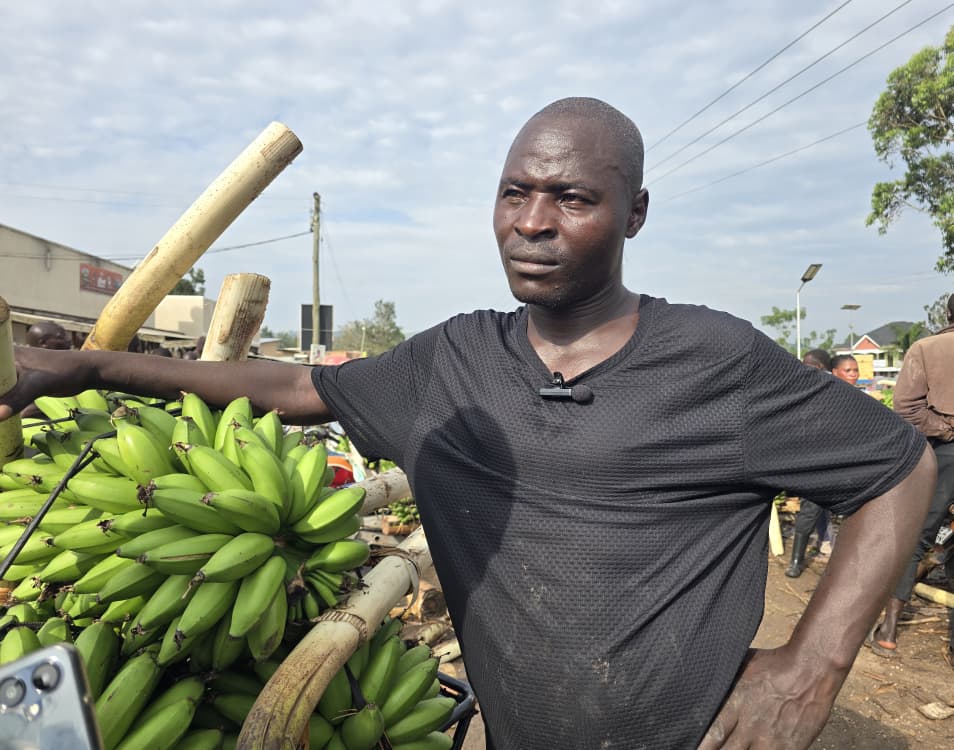
Banana traders and dealers in Ntungamo Municipality are grappling with heavy losses following a sharp decline in matooke prices, a situation they blame on oversupply, transport challenges, high taxes and growing insecurity along key trading routes.
At the Matooke Main Market in Ntungamo Municipality, traders say prices have remained depressed since the festive season, even as supply continues to increase.
On some days, the market now receives more than 800 bunches of matooke, leaving traders struggling to clear stock and recover operating costs.
David Mbangirwe, a banana dealer from Ruhaama, says the drop in prices has been drastic. “Since the festive season, the prices of banana have been very low.
The biggest bunch that I used to sell at Shs30,000 is now going for Shs11,000,” Mbangirwe said. He added that transportation constraints have worsened the situation.
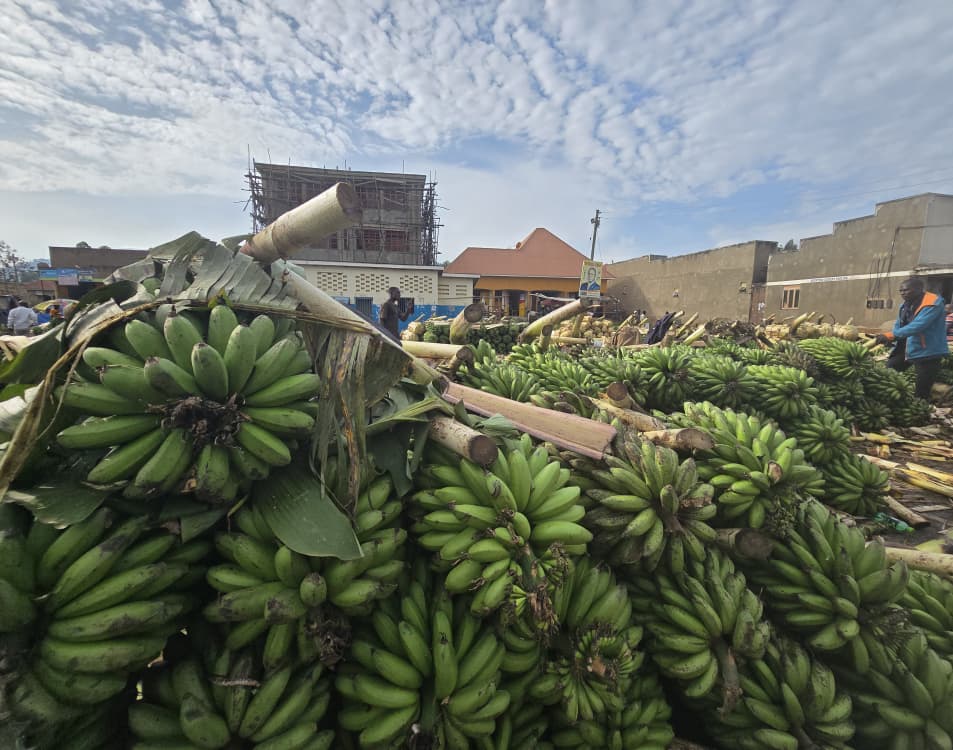
“We also need more vehicles to take this matooke to bigger markets. It has become a terrible problem, with matooke getting stuck here for days. Taxes are also too high.”
Mbangirwe noted that even bulk sales are no longer viable.
“Previously, I was selling a whole motorcycle of matooke at Shs120,000, but now they are giving me Shs55,000,” he said.
Other traders say the glut has forced them to sell at a loss, especially as farmers continue supplying large quantities.
Denis Tumuramye said traders are caught between high farm-gate prices and low market returns.
“The prices are too low and we don’t have enough money. Sometimes we buy highly from farmers but sell at very low prices because of the large quantities in the market,” Tumuramye said.
Orina Naturinda also pointed to low earnings and poor services as key challenges.
“We work but we have low earnings. The banana prices are too low, and we are also affected by poor services,” she said.
Beyond pricing pressures, traders reported insecurity within and around the market.
Some said they have been attacked by suspected panga-wielding men while transporting matooke, while those sourcing produce from distant areas cited poor road conditions that increase transport costs and cause delays.
Emmy Nuwagaba, a trader from Kitwe, linked the price slump partly to the recent election period.
“We were told that this challenge was caused by the elections because vehicles were blocked on the roads,” Nuwagaba said.
“We need more markets because traders tell us there is no market out there. We are stuck, and the government should help us.”
Market leadership agrees that transportation remains the biggest bottleneck. Jawadu Katamba, the chairman of the Matooke Main Market, said the absence of trucks from major destination markets has crippled trade.
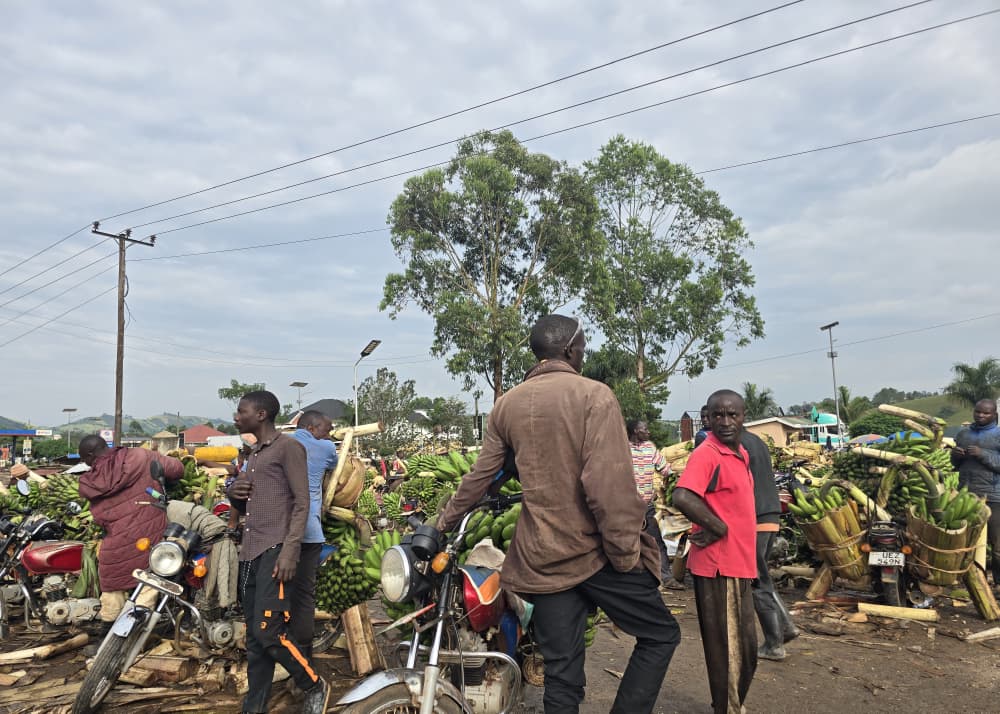
“The problem is transportation. Vehicles from Kampala have not been returning, and transport fares are now very high,” Katamba said.
“We used to have trucks transporting matooke to Sudan and Kenya, but now we have no vehicles. Prices are reducing completely. We call on those we voted for to help us get a few vehicles to support transportation.”
The Matooke Main Market operates daily but is usually busiest on Monday, Thursday and Friday.
Traders say that while more than 50 vehicles previously delivered matooke to the market and over 30 trucks transported produce to other markets, this flow has significantly reduced, worsening congestion and driving prices further down.
Traders are now calling on local and national leaders to urgently intervene by supporting transport logistics, improving security, addressing poor road infrastructure and expanding access to regional and national markets to stabilise prices and protect their livelihoods
